Buried Garden
Year
Location
Qatif, Saudi Arabia
Type
Architecture
Status
Completed
Area
360 m²
Buried Garden
Where a narrow urban plot might have closed in, this house excavates — turning its basement into a daylit garden and the most generous room of the plan.
Challenge. A 360 m² urban plot — the kind of tight inner-city site that usually produces compromise. The brief asked for two guest majlis, a family living area, a master suite with additional bedrooms, a pool, and full service zones. On a plot this narrow, most houses accept that some rooms will be cramped or without light. The question was how to deliver spatial generosity on a footprint that does not generously give it.
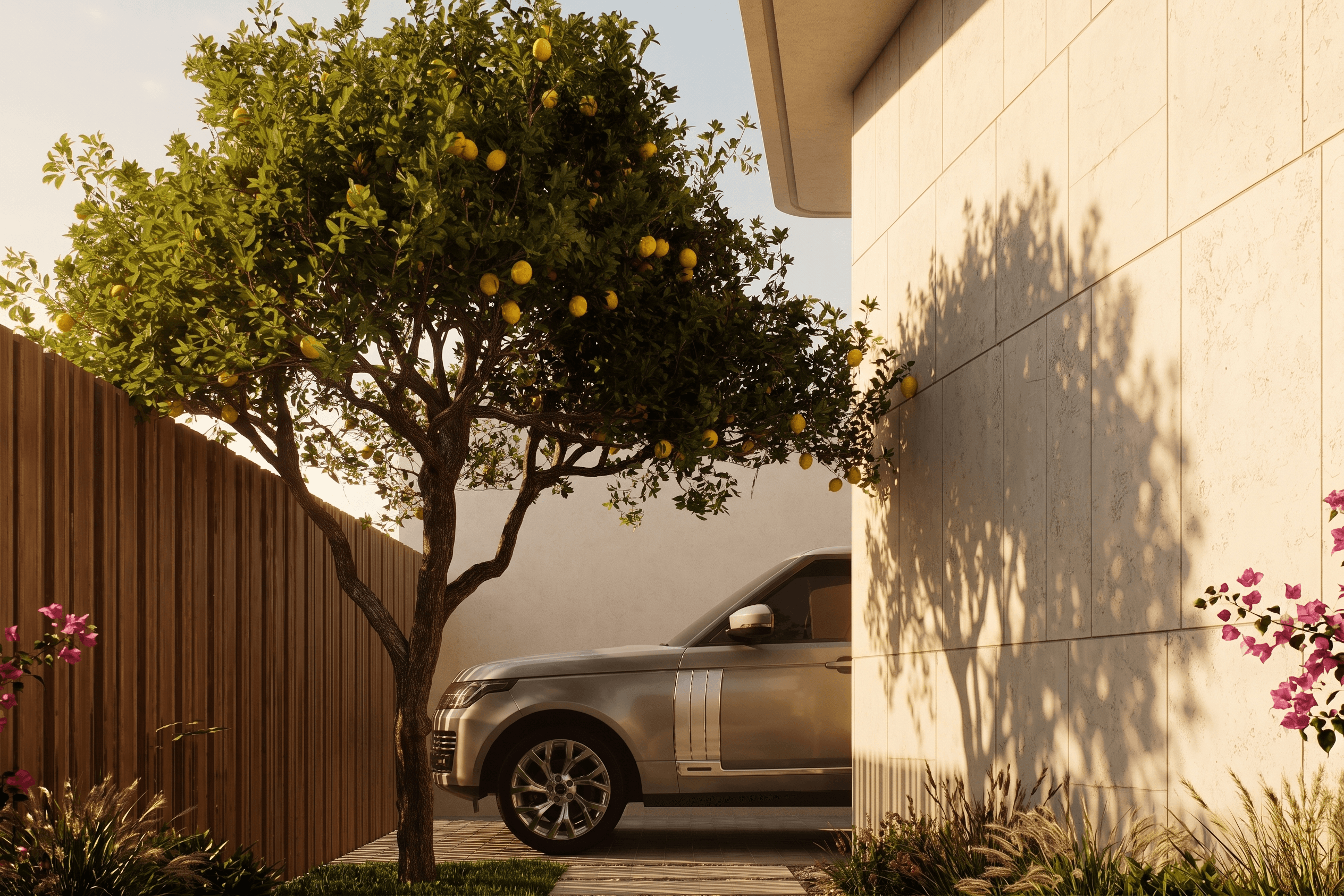
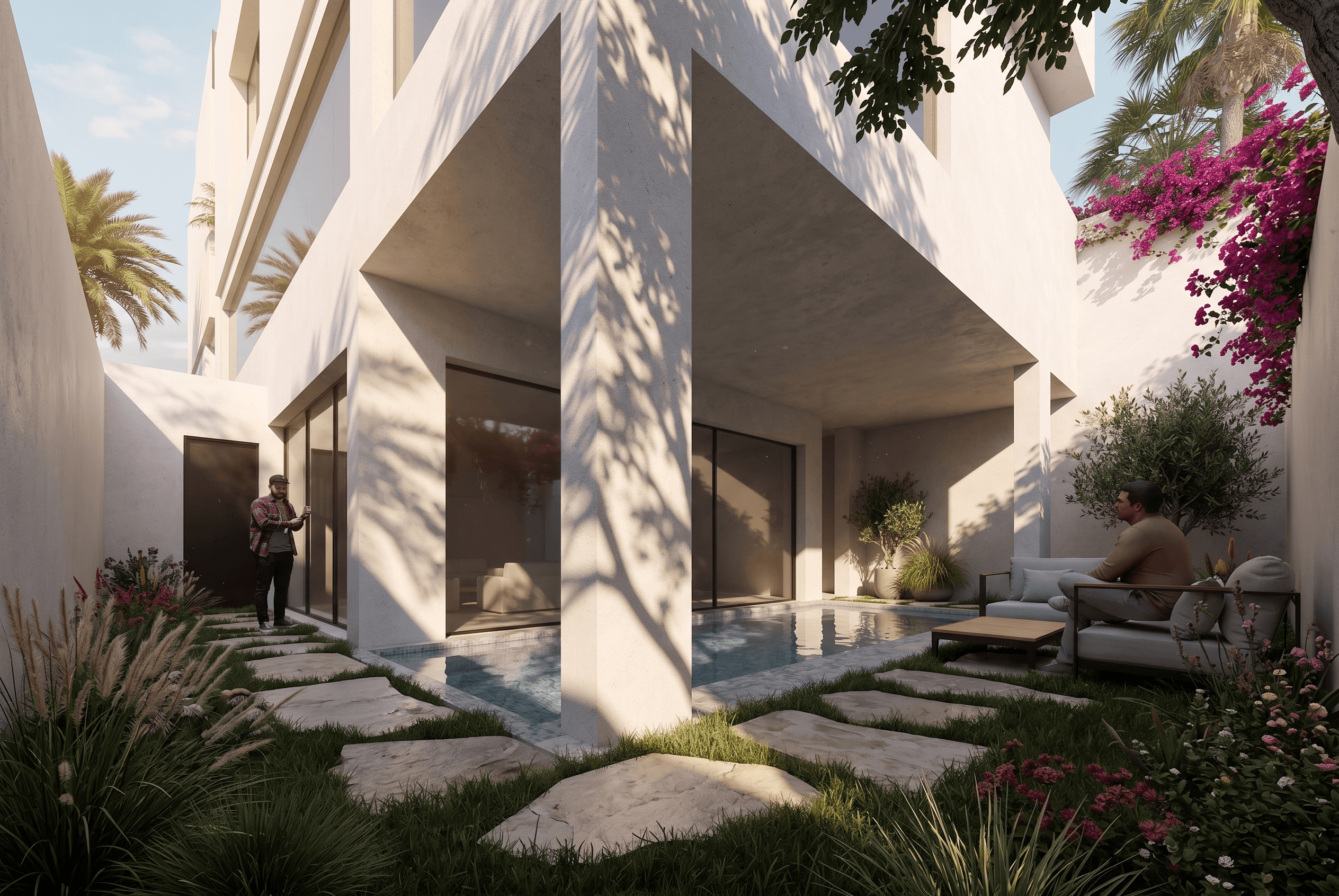
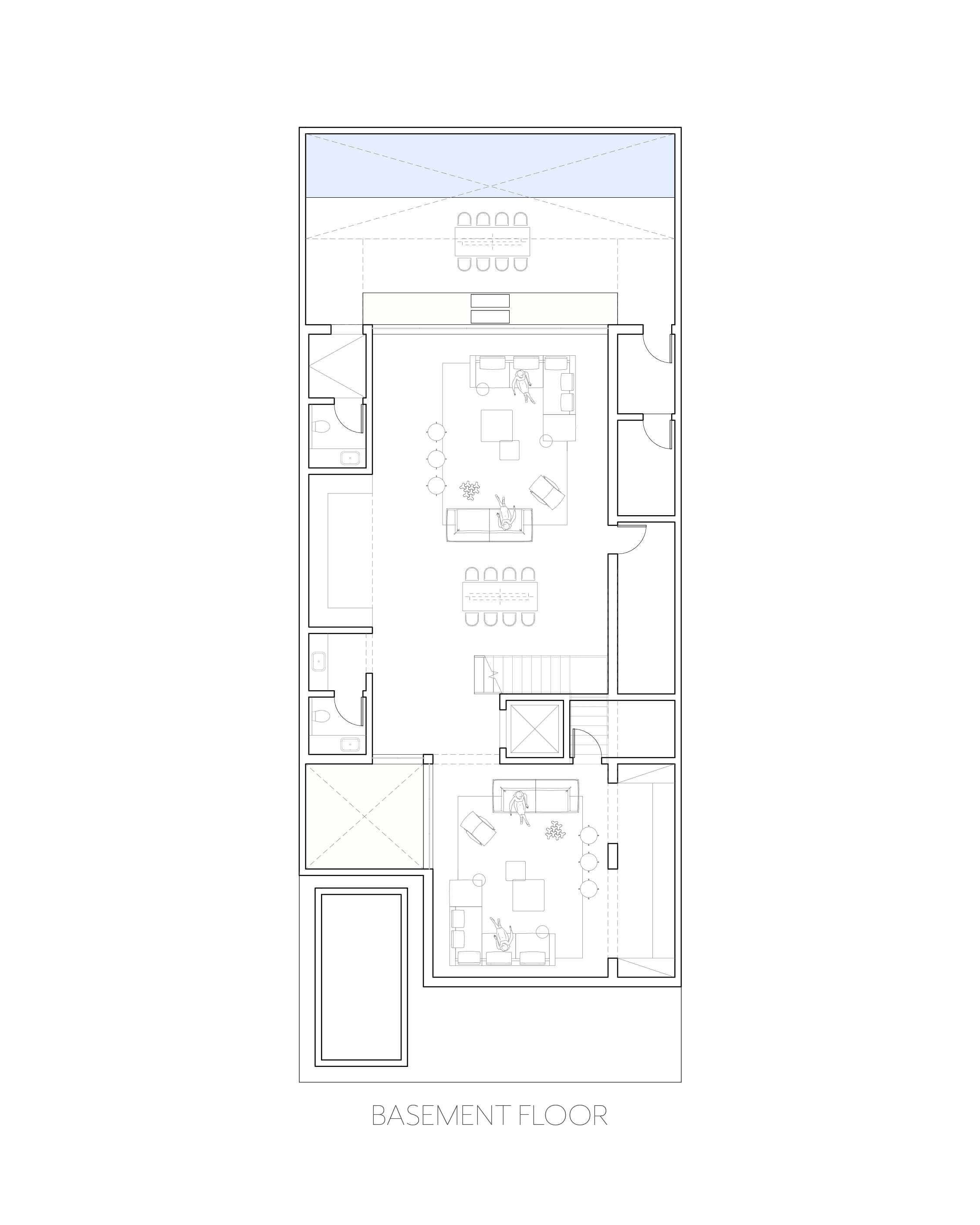
Concept. Excavate for the rooms that need it most. The basement — usually the sacrificed floor, reserved for storage and mechanical — becomes the most generous level of the house. Two sunken courtyards carve open-air voids into the lot, pulling daylight and breeze four meters down. A pool, outdoor seating, and both guest majlis sit at this level, each with its own view onto a garden. The basement is not a basement. It is the main entertainment floor, with its own sky.
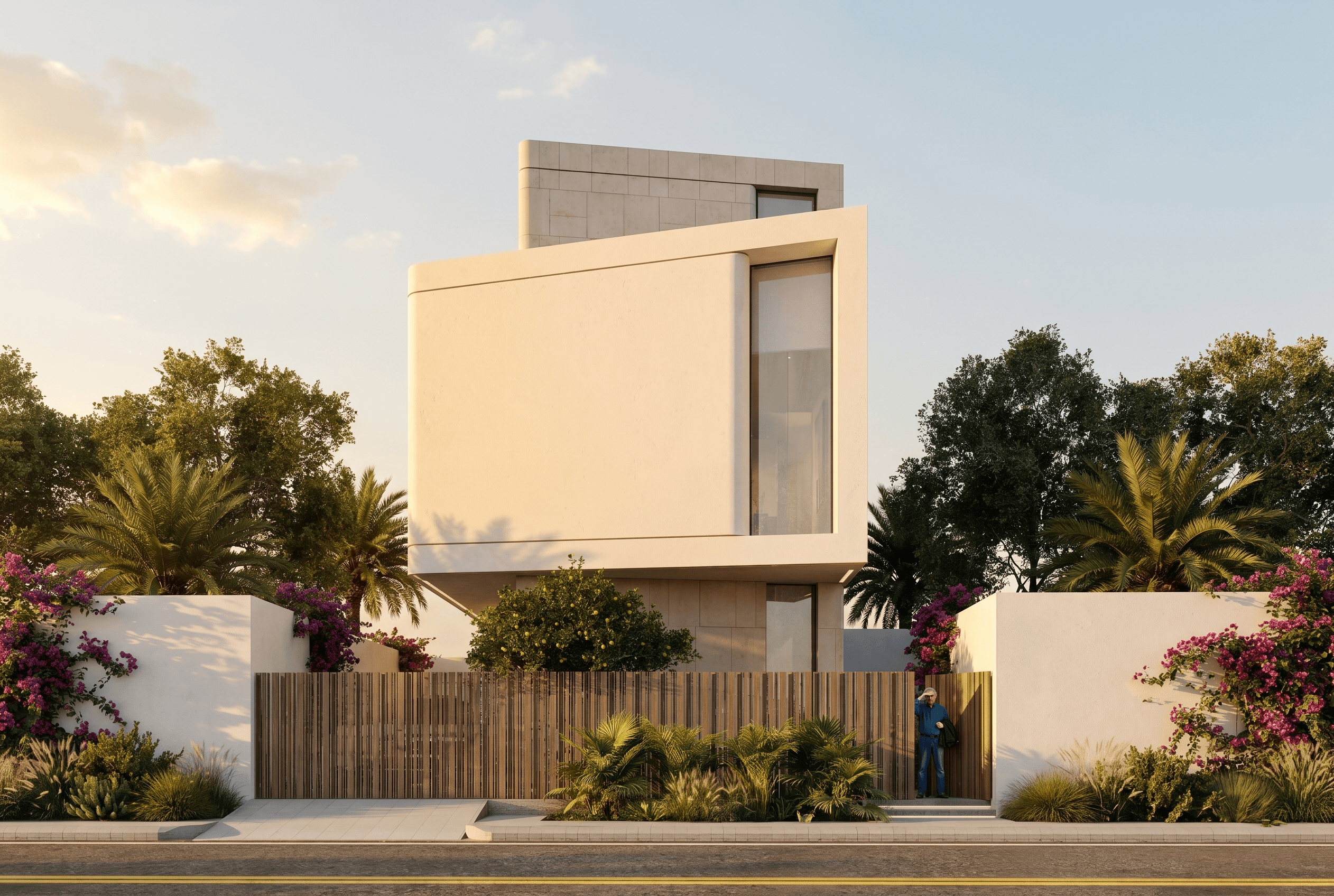
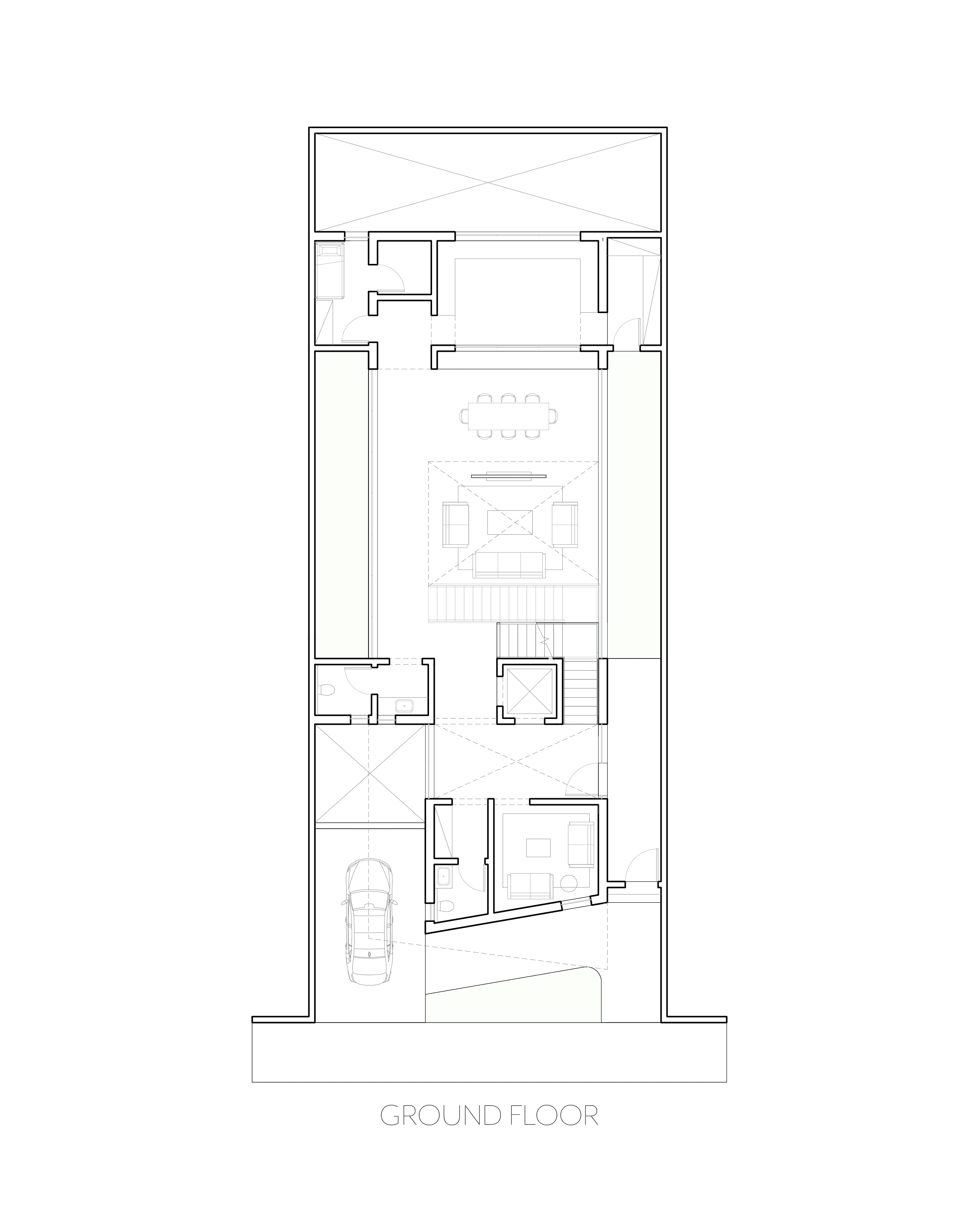
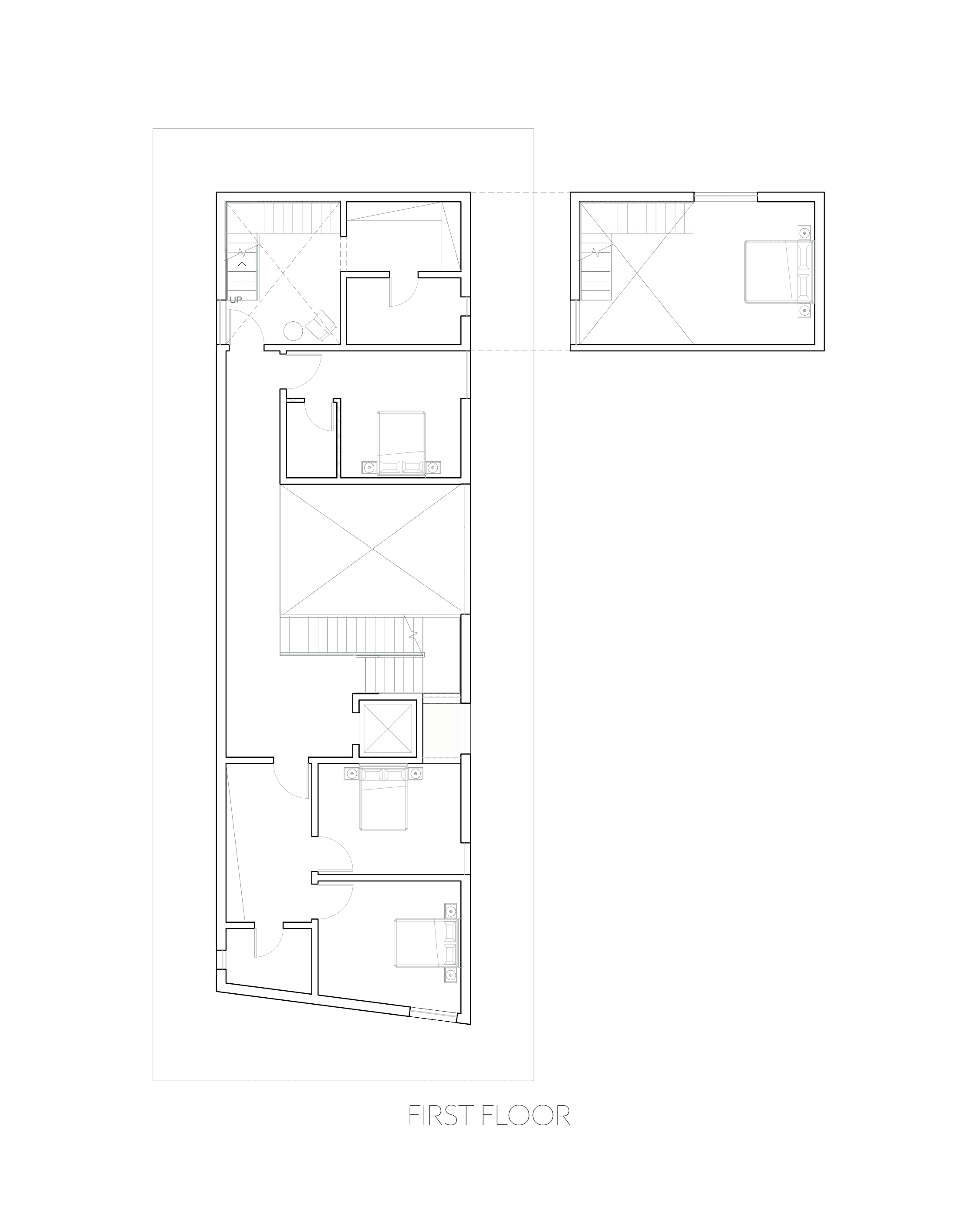
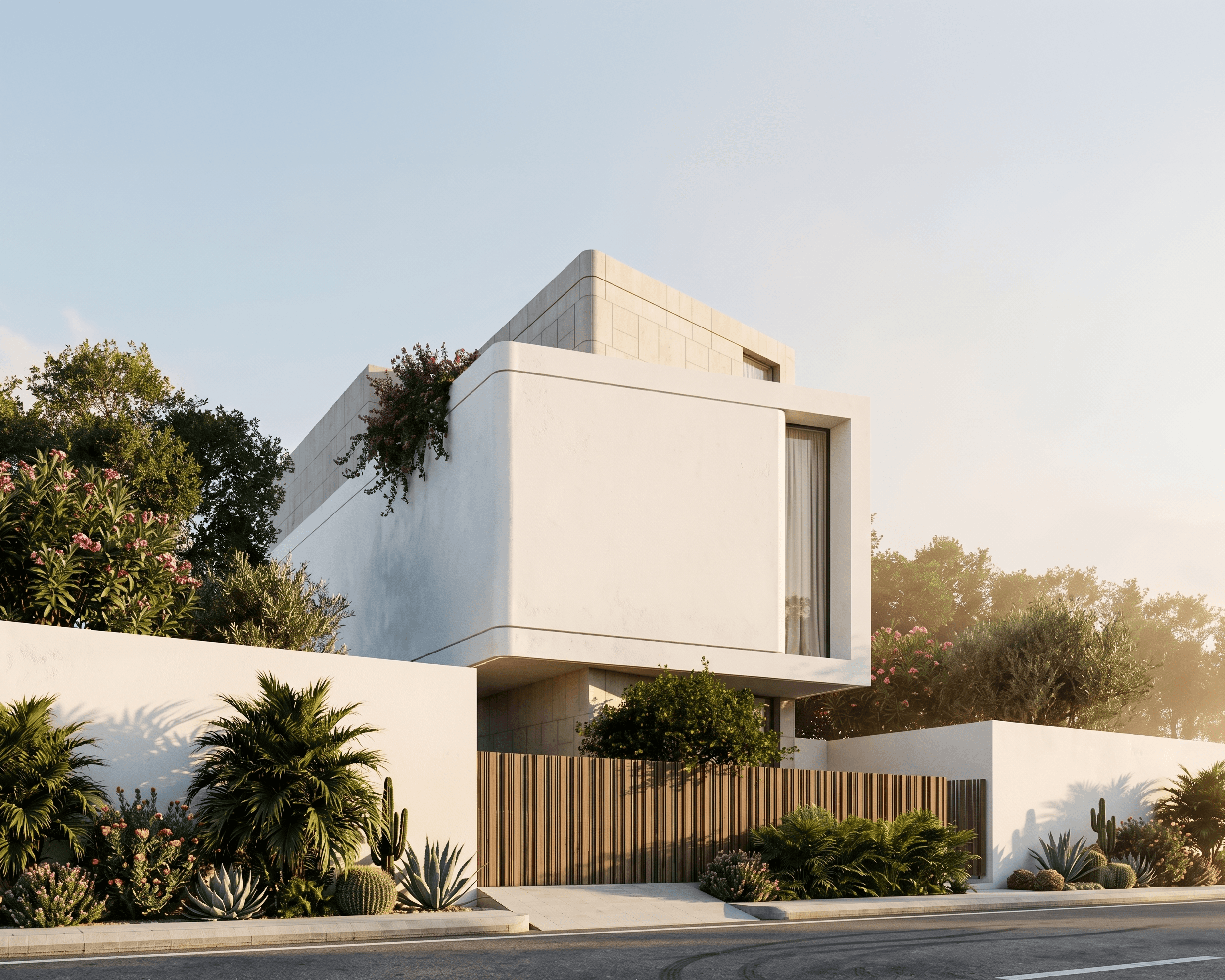
Key moves. Two circulation spines, drawn from the first sketch. One stair descends from the entrance directly to the basement majlis, so guests never pass through family space. The second rises from the ground floor to the family deck. The two never meet. On the ground floor, the entrance opens onto a framed view of a garden — a single gesture that sets the tone before any room is entered. A double-height living room anchors the plan, with a mezzanine master suite above it: bed on the upper level, closet and bathroom below. The exterior answers the interior with restraint — an angular cantilevered volume in three materials, designed to read as a quiet, sculpted object on a busy street.
Visualization
D5 render